
F is for Flexibility
“We need to be flexible.” That phrase is forevermore a trigger in my brain. Cultural flexibility means to be able to change or be changed easily according to the cultural context you’re in.
I was 16 and it was my first overseas trip, volunteering around the Olympic Games in Greece. It was my first experience of a culture who have a flexible idea of time, plans, and what should happen when. Clue – it’s not what you have written down on your agenda, or in the order that you’ve written it down! By the end of two weeks, my Australian-ness was tired of hearing our plans being changed and the explanation from our group leaders being, “we need to be flexible.”
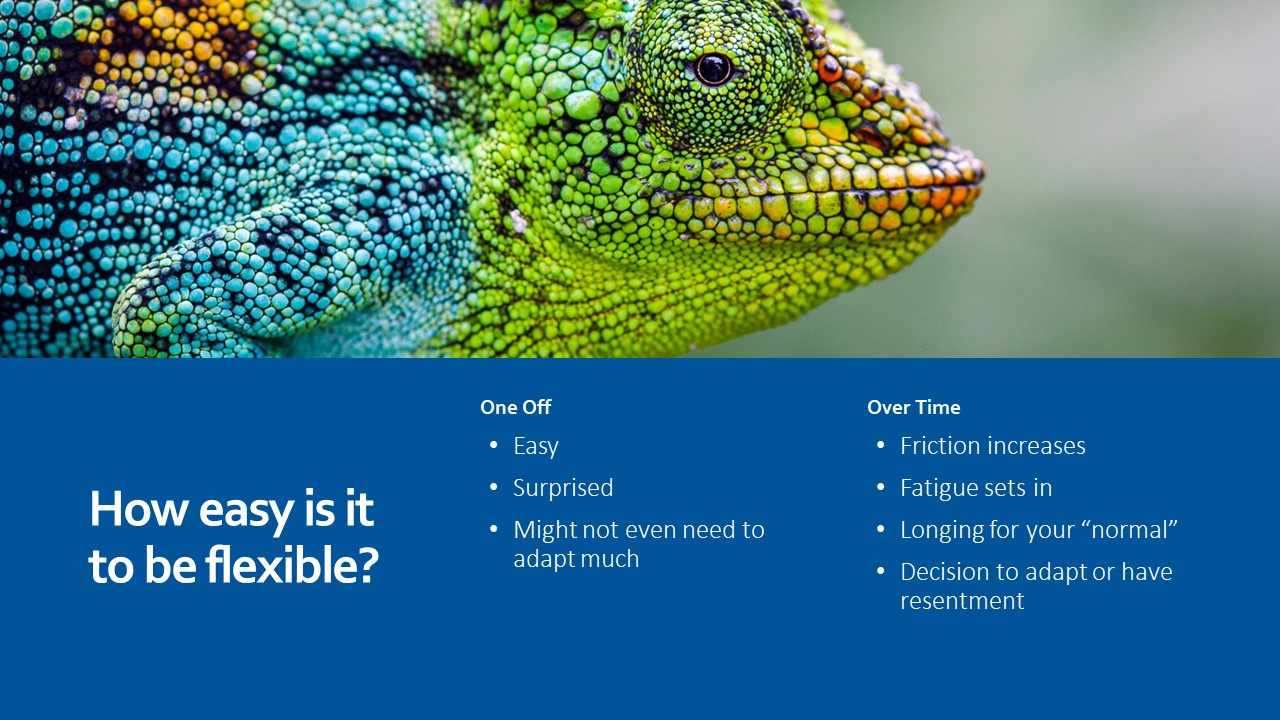
We all like to think we have cultural flexibility, adapting to different situations. But real-life experiences, if we’re not prepared, often show us we’re not. Our brains prefer our routines. If you have to adapt once, it’s fairly easy. But if you have to adapt repeatedly over a longer period of time, we start to resist.
The good news is that practice improves our flexibility. Like willpower, flexibility is a muscle that we need to use, through experience, if we want to get better at it – especially in the context of cross-cultural communication.
A-Z of Cross-Cultural Awareness
This blog post is part of a series of short posts on cross-cultural awareness. Keep an eye out for the rest of the series.