
L is for Listening
When the nuances of cross-cultural communication seem infinite, the benefits of active listening cannot be underestimated. Active listening is therefore a critical skill to master. It involves listening to what someone is saying and seeking to understand them. In addition, you are listening for their implicit messages too, such as their feelings about the subject matter. It also involves responding appropriately and with interest, so the other person feels seen, heard and understood.
Whilst there are many articles with tips on active listening, when I was working as an Executive Assistant, I discovered a secret one – I learnt to listen when no one was talking…yes, really.
For example, if you pay close attention in some of the spaces I list below, you can pick up significant additional context and information.
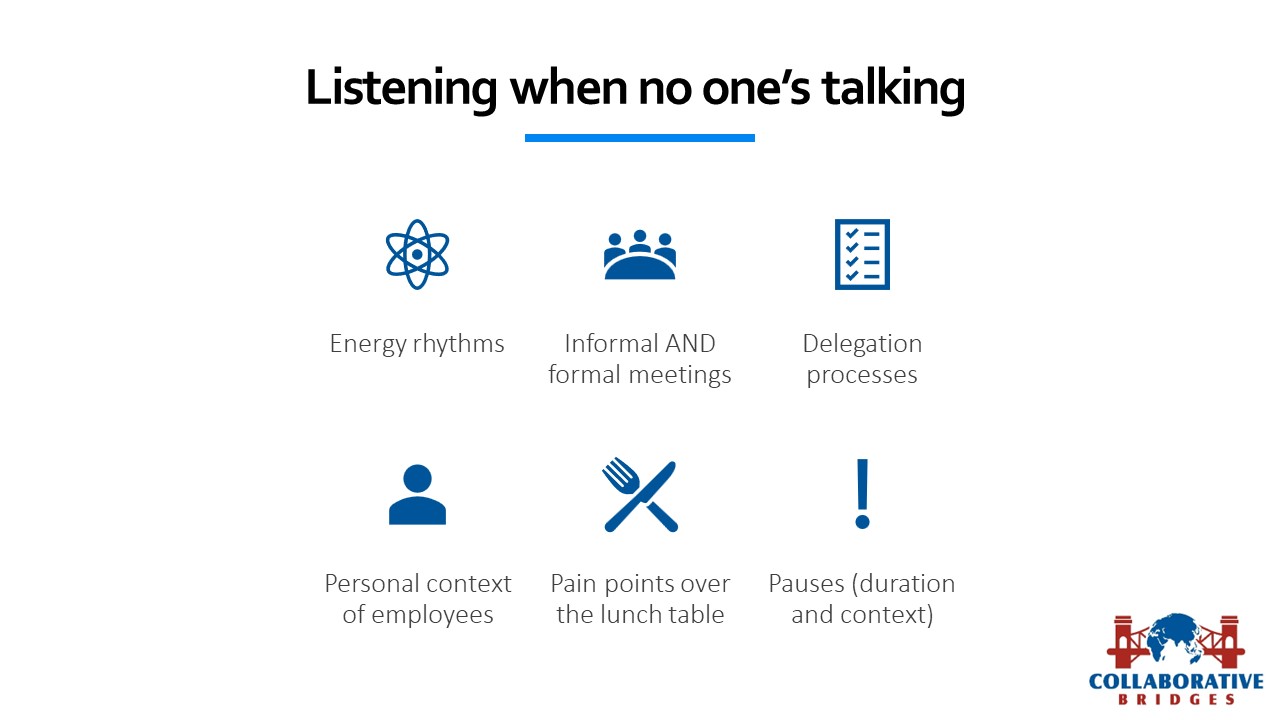
Actively listen and pay attention to:
– Energy rhythms throughout the work day
– Informal AND formal meetings
– Delegation processes
– Personal context of employees
– Pain points over the lunch table
– Pauses (duration and context)
The benefits of active listening in these scenarios, especially in cross-cultural contexts, can help you achieve goal & expectation alignment, creative problem solving, opportunities for learning & improvement, healthy work relationships & better inclusion and engagement – but only if you’re actively listening.
I’m interested – can you think of any other spaces where it’s important to listen when no one’s talking?
A-Z of Cross-Cultural Awareness
This blog post is part of a series of short posts on cross-cultural awareness. Keep an eye out for the rest of the series.