

P is for Productivity
If you understand cultural differences in time management, it can broaden your ideas of what is considered efficient and allow you to have a more inclusive approach to personal productivity in the workplace. I love helping people with both productivity and cross-cultural communication, so today I thought I’d provide some insight on how the two can impact each other 💡
Universally all humans need help in the digital age of the workforce – otherwise we’d be overwhelmed by all the information coming at us. There are common tools that help everyone – reaching inbox zero, using a prioritised task list, using a digital calendar for meetings and having a regular system to review your work, to name just a few.
It’s in HOW we use these tools where some cultural differences in time management might appear. For example, do I schedule my tasks into my calendar, completing them in order? Or do I approach it with more flexibility and address the ones I need to as my priorities change throughout the day? I’ve put some more examples in the image below.
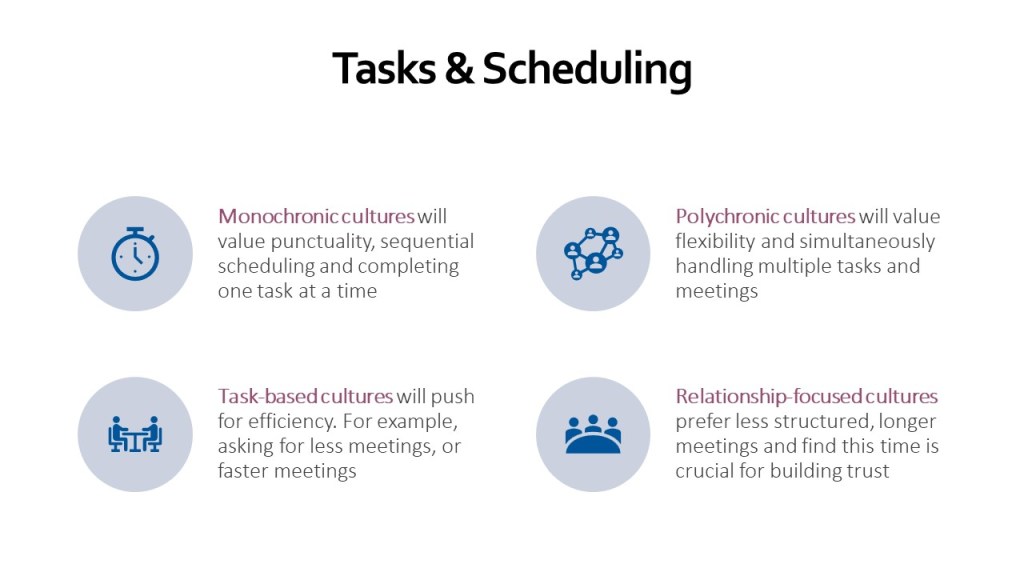
I find it very interesting that most of the famous productivity experts come from cultures that are monochronic (have a linear approach to time), individualistic and task-focused. Thus, I am always keeping an eye out to learn what polychronic, collective and relationship-focused cultures might teach us about cultural differences in time management and personal productivity.
Have you noticed any cultural differences in approaches to personal productivity in your workplace? I’d love to hear about them!
A-Z of Cross-Cultural Awareness
This blog post is part of a series of short posts on cross-cultural awareness. Keep an eye out for the rest of the series.